Esta web utiliza cookies propias y de terceros que nos permiten optimizar tu experiencia en el sitio web, evaluar su rendimiento, generar estadísticas de uso y mejorar y añadir nuevas funcionalidades. Mediante el análisis de tus hábitos de navegación podemos mostrar contenidos más relevantes y medir las interacciones con la web.
Puede obtener más información aquí.
Una cookie és un fitxer que es descàrrega en el teu ordinador en accedir a determinades pàgines web.Les cookies permeten a una pàgina web, entre altres coses, emmagatzemar i recuperar informació sobre els hàbits de navegació d'un usuari o del seu equip, gestionar l'accés d'usuaris a zones restringides de la web, etc.Tipus de cookies utilitza aquesta pàgina web:
Este tipo de cookies permiten al usuario la navegación a través de una página web, plataforma o aplicación y la utilización de las diferentes opciones o servicios que en ella existan como, por ejemplo, controlar el tráfico y la comunicación de datos, identificar la sesión, acceder a partes de acceso restringido, seleccionar el idioma, o compartir contenidos a través de redes sociales.
| Nombre | Descripcion | Duración | Habilitado |
|---|---|---|---|
| ID de tu sesión. Te identifica en este navegador y nos permite gestionar tus cookies o almacenar tu cesta de la compra. | 8760 horas | ||
| Indica qué cookies has aceptado. | 8760 horas | ||
| Una cookie PHPSESSID es una cookie de sesión que se utiliza para identificar la sesión de un usuario en un sitio web. | 8760 horas |
Son aquéllas que posibilitan el seguimiento y análisis del comportamiento de los usuarios en nuestra página. La información recogida se utiliza para la medición de la actividad de los usuarios en la web y la elaboración de perfiles de navegación de los usuarios, con la finalidad de mejorar la web, así como los productos y servicios ofertados.
| Nombre | Descripcion | Duración | Habilitado |
|---|---|---|---|
| Es un servicio de analítica web que utiliza cookies de análisis. | 8760 horas |
Estas cookies pueden ser establecidas a través de nuestro sitio por nuestros socios publicitarios. Pueden ser utilizadas por esas empresas para crear un perfil de sus intereses y mostrarle anuncios relevantes en otros sitios. No almacenan directamente información personal, sino que se basan en la identificación única de su navegador y dispositivo de Internet. Si no permite utilizar estas cookies, verá menos publicidad dirigida.
| Nombre | Descripcion | Duración | Habilitado |
|---|
Què són les Cookies?
Una cookie és un fitxer que es descarrega en el teu ordinador en accedir a determinades pàgines web. Les cookies permeten a una pàgina web, entre altres coses, emmagatzemar i recuperar informació sobre els hàbits de navegació d'un usuari o del seu equip, gestionar l'accés d'usuaris a zones restringides de la web, etc...
Quin tipus de cookies utilitza aquesta pàgina web?
Cookies de Anàlisi
Són aquelles que possibiliten el seguiment i l’anàlisi del comportament dels usuaris a la nostra pàgina. La informació recollida s'utilitza per al mesurament de l'activitat dels usuaris a la web i l'elaboració de perfils de navegació dels usuaris, amb la finalitat de millorar la web, així com els productes i serveis oferts.
Cookies Tècniques
Aquest tipus de cookies permeten a l'usuari la navegació a través d'una pàgina web, plataforma o aplicació i la utilització de les diferents opcions o serveis que en ella existeixin com, per exemple, controlar el tràfic i la comunicació de dades, identificar la sessió, accedir a parts d'accés restringit, o compartir continguts a través de xarxes socials
Cookies de Personalizació
Són aquelles que ens permeten adaptar la navegació a la nostra pàgina web a les vostres preferències (Ex. Idioma, navegador utilitzat, etc...)
| Nom | Propia / Tercer | Duració | Descripció | Propietari |
| _gat | Tercer | 1 minut | Es fa servir per a limitar el percentatge de sol.licituts. | Google Analytics |
| _ga | Tercer | 2 anys | Es fa servir per a distinguir els usuaris. | Google Analytics |
| _gid | Tercer | 24 hores | Es fa servir per a distinguir els usuaris. | Google Analytics |
| PHPSESSID | Propia | Sesió | Cookie de sessió, desapareix quan es tanca la web. | Arnoia |
| COOKIE_CONSENT | Propia | 1 mes | Cookie de personalizació. | Arnoia |
| SESS_ID | Propia | 10 díes | Cookie de Sesió. | Arnoia |
Les cookies emprades en aquesta pàgina web, són utilitzades pel responsable legal d'aquesta pàgina web i pels següents serveis o proveïdors de serveis:
- Google Analytics: És un servei d'analítica web que utilitza cookies d'anàlisi. Podeu consultar la política de privacitat d'aquest servei en aquesta adreça web. http://www.google.com/intl/es/analytics/privacyoverview.html.
Com puc desactivar o eliminar les Cookies?
Podeu permetre, bloquejar o eliminar les cookies instal•lades al vostre equip mitjançant la configuració de les opcions del navegador instal•lat al vostre ordinador. Als següents enllaços trobareu informació addicional sobre les opcions de configuració de les cookies en els diferents navegadors.
– Internet Explorer: http://windows.microsoft.com/es-es/windows7/how-to-manage-cookies-in-internet-explorer-9
– Google Chrome: http://support.google.com/chrome/bin/answer.py?hl=es&answer=95647
– Firefox: http://support.mozilla.org/es/kb/habilitar-y-deshabilitar-cookies-que-los-sitios-we
– Safari: http://support.apple.com/kb/ph5042.
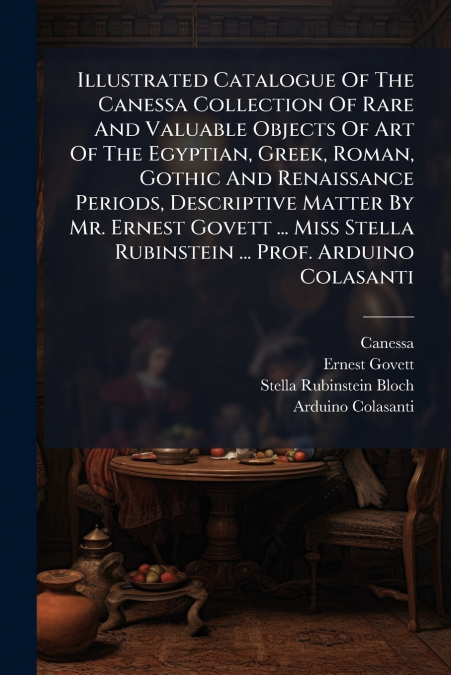
Delve into the exquisite 'Illustrated Catalogue Of The Canessa Collection,' a meticulously curated compilation of rare and valuable objects of art spanning the Egyptian, Greek, Roman, Gothic, and Renaissance periods. This catalogue, descriptive matter compiled by Mr. Ernest Govett, Miss Stella Rubinstein, and Prof. Arduino Colasanti, offers a glimpse into a world of unparalleled artistry and historical significance. Within these pages, readers will discover a diverse array of artifacts, each accompanied by detailed descriptions that illuminate their cultural and artistic importance. From ancient Egyptian relics to classical Greek sculptures, and from Roman treasures to Gothic and Renaissance masterpieces, the Canessa Collection represents a remarkable journey through the history of art. This catalogue serves as an invaluable resource for art historians, collectors, and anyone with an appreciation for the enduring beauty and cultural legacy of these remarkable objects.This work has been selected by scholars as being culturally important, and is part of the knowledge base of civilization as we know it. This work was reproduced from the original artifact, and remains as true to the original work as possible. Therefore, you will see the original copyright references, library stamps (as most of these works have been housed in our most important libraries around the world), and other notations in the work.This work is in the public domain in the United States of America, and possibly other nations. Within the United States, you may freely copy and distribute this work, as no entity (individual or corporate) has a copyright on the body of the work.As a reproduction of a historical artifact, this work may contain missing or blurred pages, poor pictures, errant marks, etc. Scholars believe, and we concur, that this work is important enough to be preserved, reproduced, and made generally available to the public. We appreciate your support of the preservation process, and thank you for being an important part of keeping this knowledge alive and relevant.