Esta web utiliza cookies propias y de terceros que nos permiten optimizar tu experiencia en el sitio web, evaluar su rendimiento, generar estadísticas de uso y mejorar y añadir nuevas funcionalidades. Mediante el análisis de tus hábitos de navegación podemos mostrar contenidos más relevantes y medir las interacciones con la web.
Puede obtener más información aquí.
Una cookie és un fitxer que es descàrrega en el teu ordinador en accedir a determinades pàgines web.Les cookies permeten a una pàgina web, entre altres coses, emmagatzemar i recuperar informació sobre els hàbits de navegació d'un usuari o del seu equip, gestionar l'accés d'usuaris a zones restringides de la web, etc.Tipus de cookies utilitza aquesta pàgina web:
Este tipo de cookies permiten al usuario la navegación a través de una página web, plataforma o aplicación y la utilización de las diferentes opciones o servicios que en ella existan como, por ejemplo, controlar el tráfico y la comunicación de datos, identificar la sesión, acceder a partes de acceso restringido, seleccionar el idioma, o compartir contenidos a través de redes sociales.
| Nombre | Descripcion | Duración | Habilitado |
|---|---|---|---|
| ID de tu sesión. Te identifica en este navegador y nos permite gestionar tus cookies o almacenar tu cesta de la compra. | 8760 horas | ||
| Indica qué cookies has aceptado. | 8760 horas | ||
| Una cookie PHPSESSID es una cookie de sesión que se utiliza para identificar la sesión de un usuario en un sitio web. | 8760 horas |
Son aquéllas que posibilitan el seguimiento y análisis del comportamiento de los usuarios en nuestra página. La información recogida se utiliza para la medición de la actividad de los usuarios en la web y la elaboración de perfiles de navegación de los usuarios, con la finalidad de mejorar la web, así como los productos y servicios ofertados.
| Nombre | Descripcion | Duración | Habilitado |
|---|---|---|---|
| Es un servicio de analítica web que utiliza cookies de análisis. | 8760 horas |
Estas cookies pueden ser establecidas a través de nuestro sitio por nuestros socios publicitarios. Pueden ser utilizadas por esas empresas para crear un perfil de sus intereses y mostrarle anuncios relevantes en otros sitios. No almacenan directamente información personal, sino que se basan en la identificación única de su navegador y dispositivo de Internet. Si no permite utilizar estas cookies, verá menos publicidad dirigida.
| Nombre | Descripcion | Duración | Habilitado |
|---|
Què són les Cookies?
Una cookie és un fitxer que es descarrega en el teu ordinador en accedir a determinades pàgines web. Les cookies permeten a una pàgina web, entre altres coses, emmagatzemar i recuperar informació sobre els hàbits de navegació d'un usuari o del seu equip, gestionar l'accés d'usuaris a zones restringides de la web, etc...
Quin tipus de cookies utilitza aquesta pàgina web?
Cookies de Anàlisi
Són aquelles que possibiliten el seguiment i l’anàlisi del comportament dels usuaris a la nostra pàgina. La informació recollida s'utilitza per al mesurament de l'activitat dels usuaris a la web i l'elaboració de perfils de navegació dels usuaris, amb la finalitat de millorar la web, així com els productes i serveis oferts.
Cookies Tècniques
Aquest tipus de cookies permeten a l'usuari la navegació a través d'una pàgina web, plataforma o aplicació i la utilització de les diferents opcions o serveis que en ella existeixin com, per exemple, controlar el tràfic i la comunicació de dades, identificar la sessió, accedir a parts d'accés restringit, o compartir continguts a través de xarxes socials
Cookies de Personalizació
Són aquelles que ens permeten adaptar la navegació a la nostra pàgina web a les vostres preferències (Ex. Idioma, navegador utilitzat, etc...)
| Nom | Propia / Tercer | Duració | Descripció | Propietari |
| _gat | Tercer | 1 minut | Es fa servir per a limitar el percentatge de sol.licituts. | Google Analytics |
| _ga | Tercer | 2 anys | Es fa servir per a distinguir els usuaris. | Google Analytics |
| _gid | Tercer | 24 hores | Es fa servir per a distinguir els usuaris. | Google Analytics |
| PHPSESSID | Propia | Sesió | Cookie de sessió, desapareix quan es tanca la web. | Arnoia |
| COOKIE_CONSENT | Propia | 1 mes | Cookie de personalizació. | Arnoia |
| SESS_ID | Propia | 10 díes | Cookie de Sesió. | Arnoia |
Les cookies emprades en aquesta pàgina web, són utilitzades pel responsable legal d'aquesta pàgina web i pels següents serveis o proveïdors de serveis:
- Google Analytics: És un servei d'analítica web que utilitza cookies d'anàlisi. Podeu consultar la política de privacitat d'aquest servei en aquesta adreça web. http://www.google.com/intl/es/analytics/privacyoverview.html.
Com puc desactivar o eliminar les Cookies?
Podeu permetre, bloquejar o eliminar les cookies instal•lades al vostre equip mitjançant la configuració de les opcions del navegador instal•lat al vostre ordinador. Als següents enllaços trobareu informació addicional sobre les opcions de configuració de les cookies en els diferents navegadors.
– Internet Explorer: http://windows.microsoft.com/es-es/windows7/how-to-manage-cookies-in-internet-explorer-9
– Google Chrome: http://support.google.com/chrome/bin/answer.py?hl=es&answer=95647
– Firefox: http://support.mozilla.org/es/kb/habilitar-y-deshabilitar-cookies-que-los-sitios-we
– Safari: http://support.apple.com/kb/ph5042.
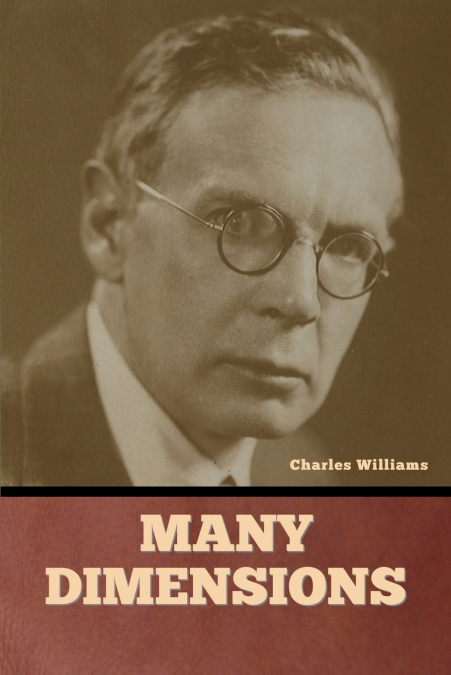
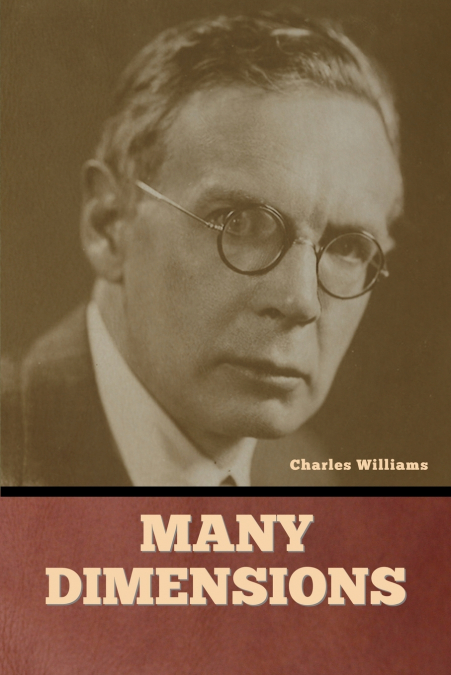
Many Dimensions was the second of the novels of the supernatural by Charles Williams. The original publisher was Victor Gollancz Ltd. in 1931. Following Williams? death it was republished by Faber & Faber in 1947 in the UK and in 1949 by Pellegrini & Cudahy in the US. In 1952 it was issued in the Penguin Books green-covered Mystery & Crime series.The novel describes the occult results following acquisition of a stone from the diadem of King Solomon, exploring the themes of time travel, the nature of the universe, and the moral consequences of selfish motivation. 'Nowhere is the intellectual quality of Williams? imagination more apparent than in Many Dimensions', Glen Cavaliero has remarked, but this has contributed to criticism of his performance in this novel. The female characters in his fiction are often unsatisfactorily realised because Williams is more focussed on the ideals they embody than on their personality. They therefore seem, as in the case of Chloe in Many Dimensions, 'formulaic and superficial'. In other ways too, Aren Roukema has pointed to how far 'Williams? tendency to stretch symbolism and allegory to the point of didacticism' disrupts the novel?s narrative continuity.In other respects, aspects of Williams? personal history have contributed to the story. Chloe herself is modelled on Phyllis Jones, his younger colleague at Oxford University Press, with whom he had an unconsummated love affair. This he transmutes into Chloe?s otherwise inexplicable dependent relationship with Lord Arglay. Again, many of the esoteric ideas treated in Many Dimensions can be traced back to the earlier period, before he began writing his novels of the supernatural, when Williams? interest in the occult associated him with A. E. Waite?s Fellowship of the Rosy Cross. In particular the phrase 'the end of desire', used of close association with the Stone in the novel, can be traced to the Fellowship?s ritual of attaining the higher self within, in which the adept repeats 'I am that which I thought and the end of my desire is with me'.Roukema comments that the word ?end? is given a deliberately double meaning and is understood differently depending on the spiritual development of the characters in the novel. It may mean cessation of desire, or else, as a goal, the fulfilment of desire. But in terms of the mystic union with the Stone that Chloe attains, its special meaning is also awareness of the primordial oneness of Creator and created, so that there is nothing outside that state to which one can become attached. In this way, by offering herself to the Stone, Chloe makes herself the channel through which the Stone can call back and reintegrate the divided Types whose meanings had been misinterpreted by their temporary possessors. ...The novel?s 'moral austerity' also derives from the more Eastern understanding in which actions are viewed as flowing from personal disposition, the consequences of which are mitigated neither by a special exercise of Divine Grace nor even Divine judgment. What happens to the characters is the direct and natural result of what their actions have already shown them to be. Cavaliero therefore perceives 'the relation between predestination and free will' as being an allied theological theme explored by the book. (wikipedia.org)