Esta web utiliza cookies propias y de terceros que nos permiten optimizar tu experiencia en el sitio web, evaluar su rendimiento, generar estadísticas de uso y mejorar y añadir nuevas funcionalidades. Mediante el análisis de tus hábitos de navegación podemos mostrar contenidos más relevantes y medir las interacciones con la web.
Puede obtener más información aquí.
Una cookie és un fitxer que es descàrrega en el teu ordinador en accedir a determinades pàgines web.Les cookies permeten a una pàgina web, entre altres coses, emmagatzemar i recuperar informació sobre els hàbits de navegació d'un usuari o del seu equip, gestionar l'accés d'usuaris a zones restringides de la web, etc.Tipus de cookies utilitza aquesta pàgina web:
Este tipo de cookies permiten al usuario la navegación a través de una página web, plataforma o aplicación y la utilización de las diferentes opciones o servicios que en ella existan como, por ejemplo, controlar el tráfico y la comunicación de datos, identificar la sesión, acceder a partes de acceso restringido, seleccionar el idioma, o compartir contenidos a través de redes sociales.
| Nombre | Descripcion | Duración | Habilitado |
|---|---|---|---|
| ID de tu sesión. Te identifica en este navegador y nos permite gestionar tus cookies o almacenar tu cesta de la compra. | 8760 horas | ||
| Indica qué cookies has aceptado. | 8760 horas | ||
| Una cookie PHPSESSID es una cookie de sesión que se utiliza para identificar la sesión de un usuario en un sitio web. | 8760 horas |
Son aquéllas que posibilitan el seguimiento y análisis del comportamiento de los usuarios en nuestra página. La información recogida se utiliza para la medición de la actividad de los usuarios en la web y la elaboración de perfiles de navegación de los usuarios, con la finalidad de mejorar la web, así como los productos y servicios ofertados.
| Nombre | Descripcion | Duración | Habilitado |
|---|---|---|---|
| Es un servicio de analítica web que utiliza cookies de análisis. | 8760 horas |
Estas cookies pueden ser establecidas a través de nuestro sitio por nuestros socios publicitarios. Pueden ser utilizadas por esas empresas para crear un perfil de sus intereses y mostrarle anuncios relevantes en otros sitios. No almacenan directamente información personal, sino que se basan en la identificación única de su navegador y dispositivo de Internet. Si no permite utilizar estas cookies, verá menos publicidad dirigida.
| Nombre | Descripcion | Duración | Habilitado |
|---|
Què són les Cookies?
Una cookie és un fitxer que es descarrega en el teu ordinador en accedir a determinades pàgines web. Les cookies permeten a una pàgina web, entre altres coses, emmagatzemar i recuperar informació sobre els hàbits de navegació d'un usuari o del seu equip, gestionar l'accés d'usuaris a zones restringides de la web, etc...
Quin tipus de cookies utilitza aquesta pàgina web?
Cookies de Anàlisi
Són aquelles que possibiliten el seguiment i l’anàlisi del comportament dels usuaris a la nostra pàgina. La informació recollida s'utilitza per al mesurament de l'activitat dels usuaris a la web i l'elaboració de perfils de navegació dels usuaris, amb la finalitat de millorar la web, així com els productes i serveis oferts.
Cookies Tècniques
Aquest tipus de cookies permeten a l'usuari la navegació a través d'una pàgina web, plataforma o aplicació i la utilització de les diferents opcions o serveis que en ella existeixin com, per exemple, controlar el tràfic i la comunicació de dades, identificar la sessió, accedir a parts d'accés restringit, o compartir continguts a través de xarxes socials
Cookies de Personalizació
Són aquelles que ens permeten adaptar la navegació a la nostra pàgina web a les vostres preferències (Ex. Idioma, navegador utilitzat, etc...)
| Nom | Propia / Tercer | Duració | Descripció | Propietari |
| _gat | Tercer | 1 minut | Es fa servir per a limitar el percentatge de sol.licituts. | Google Analytics |
| _ga | Tercer | 2 anys | Es fa servir per a distinguir els usuaris. | Google Analytics |
| _gid | Tercer | 24 hores | Es fa servir per a distinguir els usuaris. | Google Analytics |
| PHPSESSID | Propia | Sesió | Cookie de sessió, desapareix quan es tanca la web. | Arnoia |
| COOKIE_CONSENT | Propia | 1 mes | Cookie de personalizació. | Arnoia |
| SESS_ID | Propia | 10 díes | Cookie de Sesió. | Arnoia |
Les cookies emprades en aquesta pàgina web, són utilitzades pel responsable legal d'aquesta pàgina web i pels següents serveis o proveïdors de serveis:
- Google Analytics: És un servei d'analítica web que utilitza cookies d'anàlisi. Podeu consultar la política de privacitat d'aquest servei en aquesta adreça web. http://www.google.com/intl/es/analytics/privacyoverview.html.
Com puc desactivar o eliminar les Cookies?
Podeu permetre, bloquejar o eliminar les cookies instal•lades al vostre equip mitjançant la configuració de les opcions del navegador instal•lat al vostre ordinador. Als següents enllaços trobareu informació addicional sobre les opcions de configuració de les cookies en els diferents navegadors.
– Internet Explorer: http://windows.microsoft.com/es-es/windows7/how-to-manage-cookies-in-internet-explorer-9
– Google Chrome: http://support.google.com/chrome/bin/answer.py?hl=es&answer=95647
– Firefox: http://support.mozilla.org/es/kb/habilitar-y-deshabilitar-cookies-que-los-sitios-we
– Safari: http://support.apple.com/kb/ph5042.
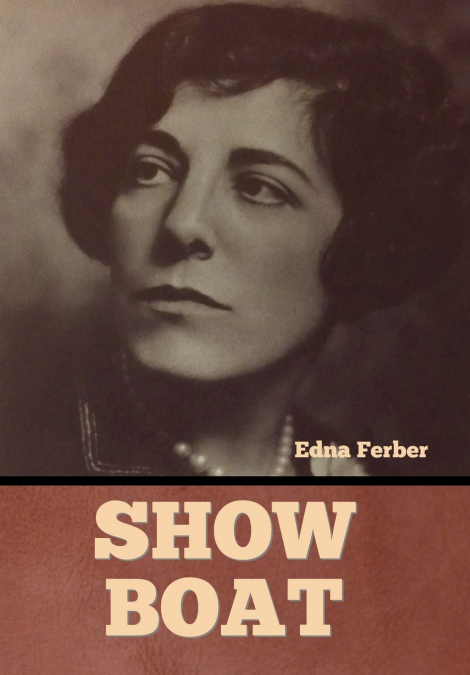
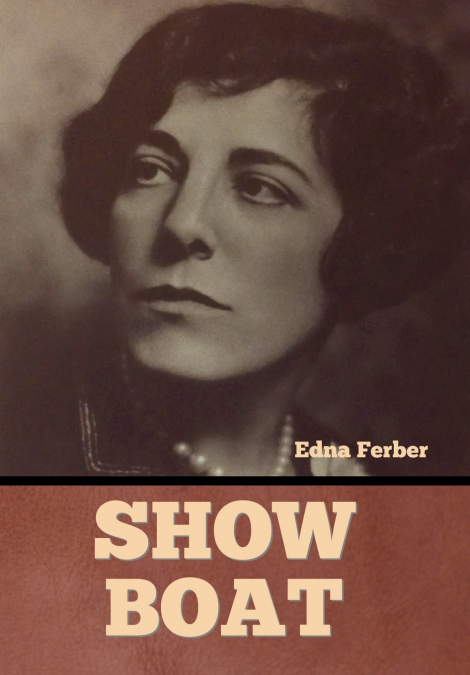
Show Boat is a 1926 novel by American author and dramatist Edna Ferber. It chronicles the lives of three generations of performers on the Cotton Blossom, a floating theater on a steamboat that travels between small towns along the banks of the Mississippi River, from the 1880s to the 1920s. The story moves from the Reconstruction Era riverboat to Gilded Age Chicago to Roaring Twenties New York, and finally returns to the Mississippi River.Show Boat was adapted as a Broadway musical in 1927 by Jerome Kern and Oscar Hammerstein II. Three films followed: a 1929 version that depended partly on the musical, and two full adaptations of the musical in 1936 and 1951. In August 1924, Edna Ferber watched as the opening performance of her play Minick (co-written with George S. Kaufman) was disrupted by an invasion of bats that had been nesting undetected in the chandeliers and dome of the playhouse. Alarmed theatergoers scurried for the exits. As the crew recovered from this debacle, Winthrop Ames, the show?s producer, jokingly remarked: 'Next time... we won?t bother with tryouts. We?ll all charter a show boat and we?ll just drift down the rivers, playing the towns as we come to them.'Show boats were floating theaters that traveled along rivers of the United States from the 1870s to the 1930s. The performers lived aboard the vessels. With song, dance, and dramatic productions, show boats provided entertainment for small riverside towns that were otherwise quite isolated. Ferber, who had never heard of show boats, was immediately intrigued:'Here, I thought, was one of the most melodramatic and gorgeous bits of Americana that had ever come my way. It was not only the theater - it was the theater plus the glamour of the wandering drifting life, the drama of the river towns, the mystery and terror of the Mississippi itself... I spent a year hunting down every available scrap of show-boat material, reading, interviewing, taking notes and making outlines.'In 1925, Ferber traveled to Bath, North Carolina, and spent four days aboard one of the few remaining show boats in the country, the James Adams Floating Theatre, which plied the Pamlico River and Great Dismal Swamp Canal. An account of Ferber?s visit to Bath is posted at NCHistoricSites.org. The material she gathered, especially the reminiscences of Charles Hunter, the director and chief actor, provided her with 'a treasure-trove of show-boat material, human, touching, true.' Ferber spent the next year in France and New York writing the novel, and published it in the summer of 1926.The mix of romance, realistic depiction of racial issues, and nostalgia for a vanishing American past was an immediate hit with the public, and the novel was number one on the bestseller lists for twelve weeks. The critical reception was more cautious but still positive. In his New York Times review, Louis Kronenberger wrote:'With Show Boat, Miss Ferber establishes herself not as one of those who are inaugurating first-rate literature, but as one of those who are reviving first-rate story-telling. This is little else but an irresistible story, but that, surely, is enough.'By the time the James Adams Floating Theatre was destroyed by fire in 1941, the era of show boats had ended, supplanted by the motion pictures theater. Writing for the Jewish Women?s Archive, Allison Abrams described Show Boat as 'problematic' on race, claiming that the novel 'maintains a romanticized and subordinate image of Black Americans', uses 'dehumanizing and animalistic terms' for Black people, perpetuates racial stereotypes about Black men, and 'lumps Black Americans in the fold of the working class which is reflective of a perception of race as an economic class...and less so a social reality.' (wikipedia.org)